 Picture a kitchen counter somewhere in suburbia. A shiny new water ionizer sits next to the sink, with a cardboard box still folded in the recycling bin. The family that just invested several thousand dollars in it stares at the spec sheet. This family can be anyone, including you, quietly wondering the same thing as every first-time buyer: did we really need 15 plates, or would 7 have done the job just fine?
That question is at the heart of nearly every alkaline water machine purchase decision. Brands like Life Ionizers, Tyent, AlkaViva, and Enagic Kangen all lean heavily on “plate count” in their marketing. It’s easy for many to assume that more plates simply means a better machine. But plate count tells only part of the story. In this blog, we will discuss everything that actually matters in an ionizer.
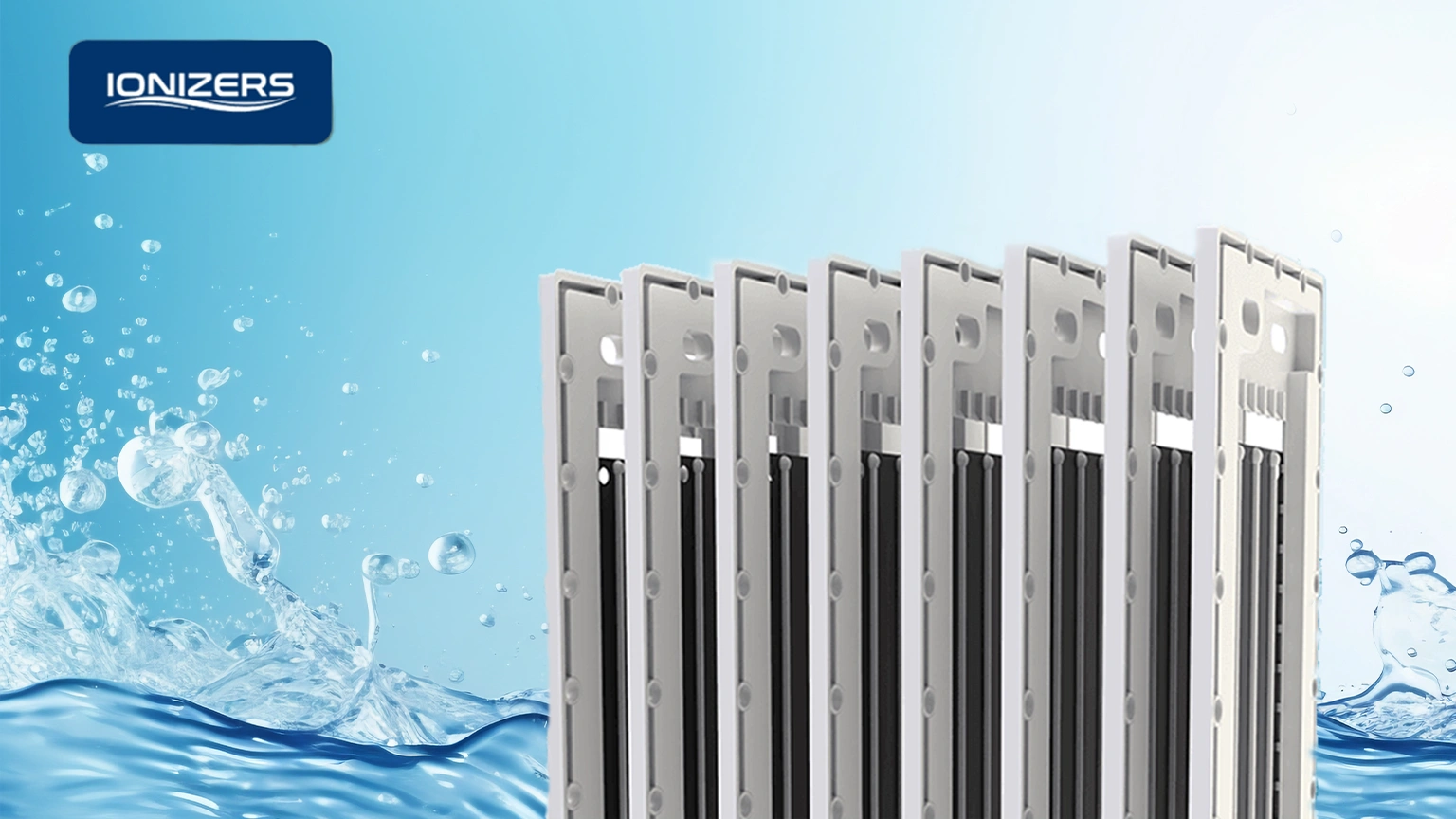
Inside every water ionizer, electrolysis happens across titanium plates coated in platinum. Running an electric current through these plates splits incoming water into alkaline (ionized) water and acidic water. The plates are essentially the engine room of the whole system. This means more plate surface area generally means more contact between water and metal, which boosts ionization strength.
Many entry-level and lower-output household ionizers use roughly 5-7 plates for drinking, cooking, and basic hydration goals. These ionized water machine:
For someone who just wants cleaner and mildly alkaline water without turning their kitchen into a lab, this tier is often plenty.
The 9-11 plate category is a common step up from entry-level systems and often combines stronger power delivery with premium features. Machines here are commonly seen in mid-tier Tyent and AlkaViva models. They typically offer:
If a household is filling water bottles daily, cooking with ionized water, or has family members chasing specific wellness goals, this range tends to hit the sweet spot.
Premium machines like Life Ionizers, Tyent, and Kangen may use 11, 12, 13, or 15 plates depending on the manufacturer and electrode configuration. These are built for:
The catch? These systems often demand more power (400-800+ watts), meaning the internal SMPS (switched-mode power supply) has to be robust enough to actually use that plate area efficiently. However, these are shopping categories rather than strict requirements. Water chemistry, electrode surface area, wattage, flow rate, filtration, and intended use may matter more than plate count alone.
Plate number only tells part of the story. Two machines with the same number of electrodes can have very different total electrode surface areas. Larger or grid-style electrodes may expose more active surface area to flowing water, so buyers should compare total plate area alongside raw plate count.
Much marketing oversimplifies things. A 15-plate machine with weak power delivery can actually underperform a well-engineered 9-plate machine. Three factors matter just as much as raw plate count:
More plates can provide greater total electrode surface area, but actual electrolysis performance also depends on plate design, power delivery, water chemistry, and chamber engineering. For instance, a well-built 9-plate machine can outperform a poorly engineered 13-plate one.
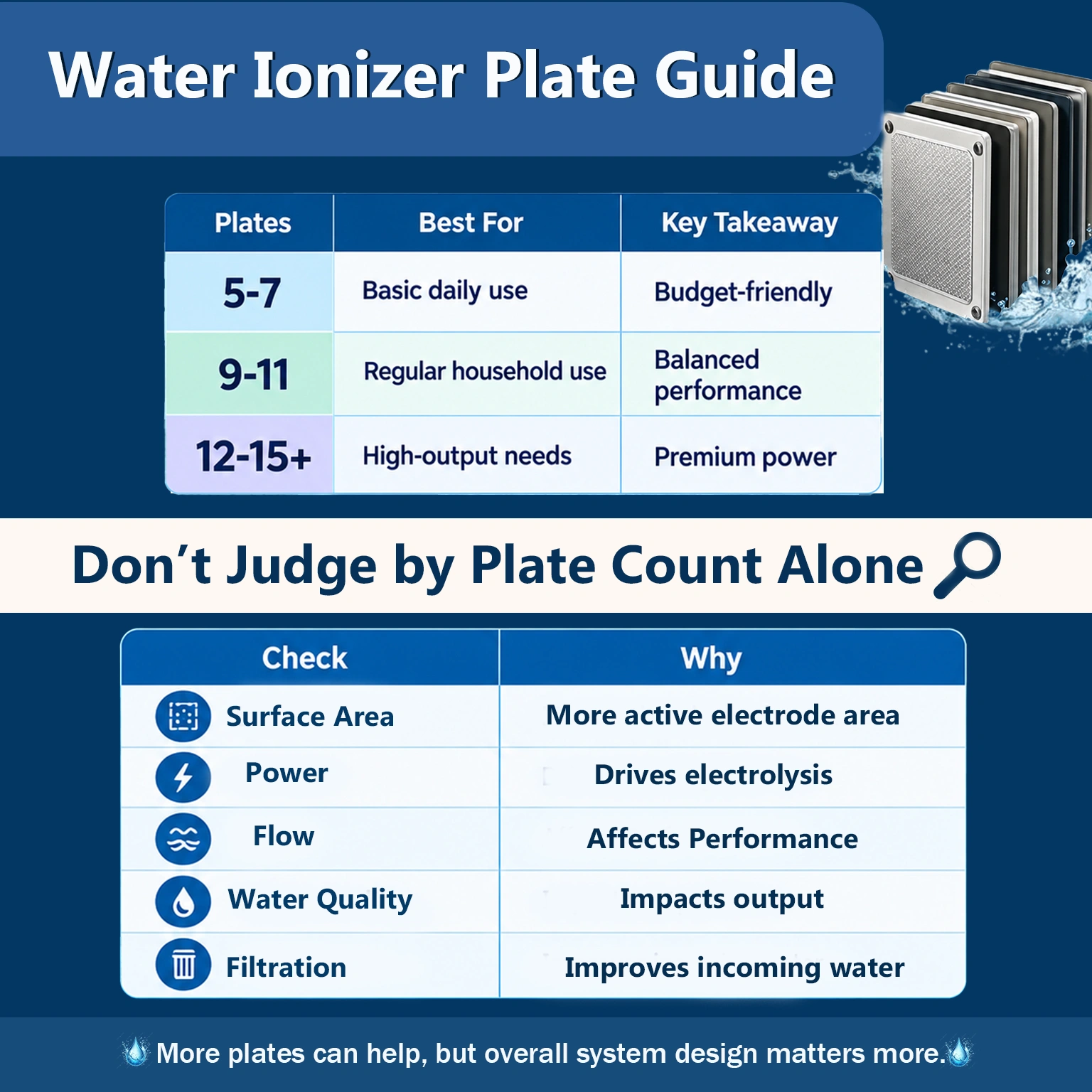
Plate count is a useful starting point, not the final word. The right alkaline water machine isn’t necessarily the one with the highest plate count. Compare total electrode surface area, power delivery, source-water compatibility, flow rate, filtration, hydrogen output, and warranty alongside the number of plates. Before comparing price tags across Life Ionizers, Tyent, AlkaViva, or Enagic Kangen—it pays to look past the plate number and ask if the whole system is engineered to use it.
An alkaline water machine uses electrolysis across platinum-coated titanium plates powered by an SMPS to split tap water into an antioxidant-rich alkaline drinking water and acidic cleaning water. Compare specs on www.ionizers.com.
Our site currently compares models including the 9-plate AlkaViva Vesta H2, Life Supreme 9-plate, and Omega 11-plate systems, and Tyent UCE configurations. Compare current plate count, power, hydrogen output, ORP, filtration, and warranty rather than choosing solely by plate number.
At Ionizers, our site sells multiple water ionizer brands and offers a free customized water-quality report to help buyers compare filtration and system requirements for their home.
There is truly no better moment to switch to superior hydration habits and excellent physical well-being. The alkaline water ionizer available on our site delivers every essential tool required to access pure and hydrogen-rich clean water easily. Don’t settle for your tap water. Start investing in your wellness journey today using our best filtration and advanced system technologies.


 800-624-1233