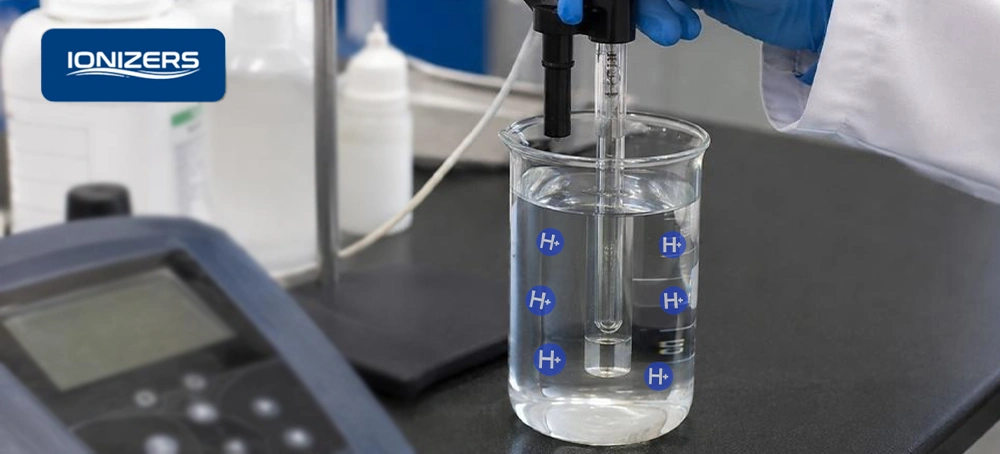
 You test your water, see a negative ORP reading, and assume you’ve found water with a high concentration of molecular hydrogen. Not so fast. ORP vs molecular hydrogen is an important distinction when you’re comparing water ionizers, checking water quality, or deciding whether a machine is worth the investment. Oxidation-reduction potential (ORP) measures a water sample’s tendency to gain or lose electrons under specific conditions. Dissolved molecular hydrogen is a different measurement. The two can be related, but one number cannot reliably tell you exactly how much hydrogen your water contains.
ORP is measured in millivolts (mV) using an electrode. A negative reading generally indicates reducing conditions relative to the measurement reference, but it doesn’t identify which dissolved substances are responsible.
In freshly electrolyzed water, dissolved hydrogen can contribute to a negative ORP reading. However, other dissolved chemicals, pH, temperature, electrode condition, and testing methods can also affect the result.
That matters when comparing machines. Two water samples might show similar ORP readings but contain different amounts of dissolved hydrogen.
An alkaline water machine typically uses electrolysis to produce water with different pH levels, depending on the model and settings. Some machines also produce hydrogen-rich water, but alkaline pH and dissolved hydrogen are separate properties.
Before buying, consider what you actually want to measure:
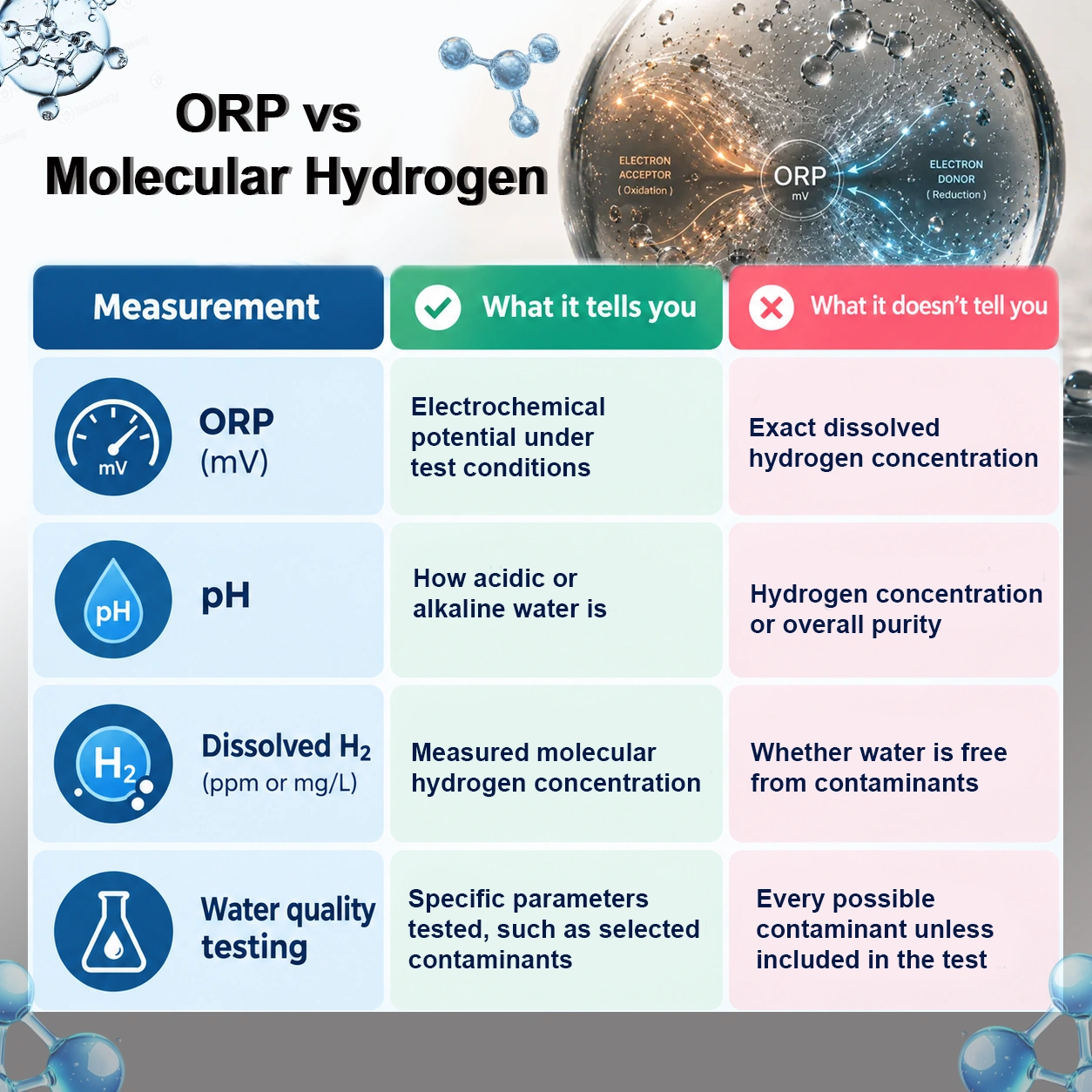
These measurements answer different questions. A single reading should not be treated as proof of overall water quality or health benefits.
If your main concern is hydrogen concentration, use a test designed to measure dissolved molecular hydrogen. A validated dissolved-hydrogen meter or an appropriate chemical test can be more informative than an ORP meter alone.
For useful results, pay attention to how and when the sample is tested. Hydrogen escapes from water over time, particularly when it is exposed to air or transferred between containers. Testing conditions can therefore affect the result.
A practical testing checklist:
ORP remains useful as a supplementary measurement, but it should not be used as a substitute for direct hydrogen testing.
An alkalizer machine may be marketed using negative ORP values, alkaline pH claims, or hydrogen-generation features. Before making a purchase, look beyond the headline number.
Ask the seller or manufacturer:
These questions help separate measurable product performance from marketing claims. Also remember that neither negative ORP nor alkaline pH, by itself, proves that water provides a particular health benefit.
If you’re shopping for an ionizer, focus on measurable performance, water quality, upkeep, and long-term ownership costs rather than choosing a machine solely because it advertises a dramatic negative ORP number.
Chanson offers countertop and under-counter ionizer options. Compare the model’s filtration, hydrogen output claims, cleaning requirements, and installation needs before choosing.
Life Ionizers offers multiple system configurations. Compare filtration options, electrode specifications, maintenance costs, and independently verified hydrogen measurements for the model you’re considering.
Both brands market water ionizers with different configurations and performance claims. Confirm the exact specifications for each model before making a purchase.
Understanding ORP vs molecular hydrogen helps you avoid an expensive mistake: buying a machine based on a number that doesn’t directly measure your main priority. Negative ORP can provide useful information about a water sample’s electrochemical conditions, but it cannot reliably quantify dissolved hydrogen on its own.
Before investing in an alkaline water machine or an alkalizer machine, compare direct hydrogen measurements, filtration performance, maintenance requirements, and the quality of the supporting evidence.
Want to make a more informed decision? Book a water quality assessment with Ionizers to review your source water and discuss the system that fits your household’s needs. Start by visiting Ionizers.com and requesting a water consultation.
No. In ORP vs molecular hydrogen comparisons, a more negative ORP reading does not necessarily mean a higher dissolved hydrogen concentration. Water chemistry, pH, temperature, and other factors influence ORP. Direct hydrogen testing is the better choice when concentration is what you need to know.
An alkaline water machine should be evaluated on more than ORP. Consider filtration, verified hydrogen output if relevant, water chemistry, replacement filters, maintenance, warranty, and independent performance data. ORP alone is not proof of water purity or health benefits.
You can compare models through Chanson Water and Life Ionizers. Before ordering an alkalizer machine, ask for model-specific dissolved hydrogen measurements and clarify the test conditions behind any advertised ORP figure.
There is truly no better moment to switch to superior hydration habits and excellent physical well-being. The alkaline water ionizer available on our site delivers every essential tool required to access pure and hydrogen-rich clean water easily. Don’t settle for your tap water. Start investing in your wellness journey today using our best filtration and advanced system technologies.


 800-624-1233