 If you’ve ever stood in the water aisle wondering whether you really need another case of alkaline water, you are not alone. Bottled water feels easy in the moment, but an alkaline water ionizer machine for home might be the smarter long-term move. Here’s how the two options compare over the long term.
Bottled water can sit in warehouses, trucks, and store shelves for weeks or months before it reaches you. A home ionizer produces water the moment you turn on the tap. This matters especially with hydrogen-rich water because dissolved molecular hydrogen can gradually escape during storage, depending on the container, seal, temperature, and time. With a home ionizer, you’re producing water when you need it rather than relying on a product that may have spent weeks in storage and distribution.
Bottled water means repeated purchases, deliveries, and always keeping stock on hand. Run out, and you’re stuck without alkaline water until your next trip to the store. An ionizer installed at your sink or countertop delivers water on demand with nothing to reorder or restock.
A single bottle may seem inexpensive, but repeated purchases add up fast for a household drinking several liters a day. A family consuming premium bottled alkaline water can easily spend thousands per year, every year, with no end in sight. For example, if we consider $2 per liter, a household drinking 4 liters of bottled alkaline water per day would spend about $2,920 annually. Actual costs vary significantly by brand, bottle size, household consumption, filter replacement, and ionizer price. An alkaline water machine has a higher upfront cost, but after installation your ongoing expenses shrink to tap water plus periodic filter replacement. In fact, many households find the break-even point arrives within the first couple of years.
This is where the gap becomes hard to ignore. According to the OECD, only a small fraction of plastic waste worldwide actually gets recycled. The rest ends up in landfills or oceans, where it can take centuries to break down and release microplastics into soil and water along the way. Add to that the fossil fuels burned in manufacturing bottles and the emissions from shipping water and bottled water’s carbon footprint is substantial. Many bottled brands also draw from natural springs or municipal supplies, straining local water resources.
An ionized water machine can eliminate much of the recurring single-use bottle production, packaging, and transportation associated with bottled water. You are just using water pulled from your own tap and used as needed, but the ionizer itself still requires filters, electricity, and eventual maintenance or replacement.
Bottled water gives you one fixed pH, decided by the manufacturer. A home ionizer typically offers multiple selectable water settings. You are getting both mild alkaline water for daily drinking and acidic water for external or household use. That flexibility simply isn’t available from a bottle.
Ionized water produced through electrolysis carries dissolved molecular hydrogen and a negative oxidation-reduction potential (ORP). Electrolysis can generate dissolved molecular hydrogen and alter the water’s redox characteristics, while actual output depends on the hydrogen water machine design and source-water chemistry. Conventional bottled alkaline or mineral water is not necessarily hydrogen-rich. Dedicated bottled hydrogen-water products do exist, but dissolved hydrogen can be sensitive to storage conditions and packaging. Research into molecular hydrogen’s effects on oxidative stress and recovery is still developing, but it’s a genuinely different chemistry than a bottle of mineral water offers.
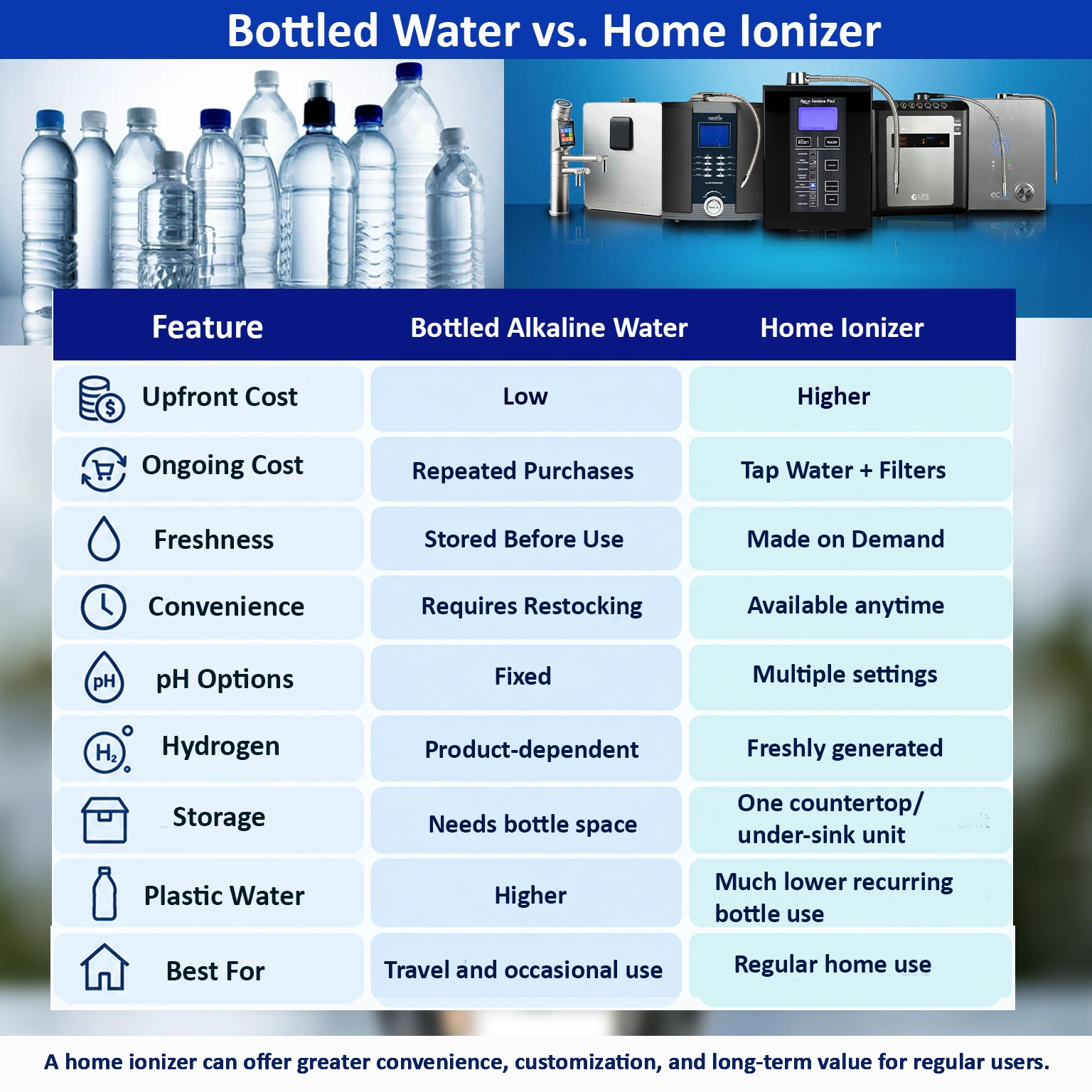
Bottled water needs somewhere to live, like cartons, multi-packs, and pantry space. An ionizer needs only the footprint of the unit itself, whether countertop or under-sink.
If you’re leaning toward a water ionizer machine, it helps to know the landscape. A few names often come up while researching:
Each brand differs in plate material, filtration add-ons, warranty length, and price; it’s worth comparing specs side by side rather than assuming one name is automatically “better.”
To be fair, bottled alkaline water is a reasonable choice for travelers, occasional drinkers, or anyone testing the waters before committing to an appliance.
For a household drinking alkaline or hydrogen water daily, an alkaline water ionizer machine for home generally wins on cost, convenience, customization, and environmental impact. Bottled water still has a place for travel and short-term use, but as a long-term investment, the ionizer is hard to beat.
An alkaline water machine uses electrolysis to split tap water into alkaline and acidic streams. It delivers fresh ionized water rich in dissolved molecular hydrogen on demand. Bottled water relies on added minerals, lacks active hydrogen, and loses antioxidant properties (ORP) during warehouse storage and transport.
Yes, an alkaline water machine for home requires an upfront investment, but it typically reaches a financial break-even point within 1 to 2 years for an active household. Over a 5- to 10-year period, drinking freshly ionized home water costs significantly less per gallon than buying premium store-bought alkaline bottled water.
You can request a free water test evaluation at ionizers.com. Enter your ZIP code and other requested information to receive recommendations based on available local water information and your filtration needs.
There is truly no better moment to switch to superior hydration habits and excellent physical well-being. The alkaline water ionizer available on our site delivers every essential tool required to access pure and hydrogen-rich clean water easily. Don’t settle for your tap water. Start investing in your wellness journey today using our best filtration and advanced system technologies.


 800-624-1233